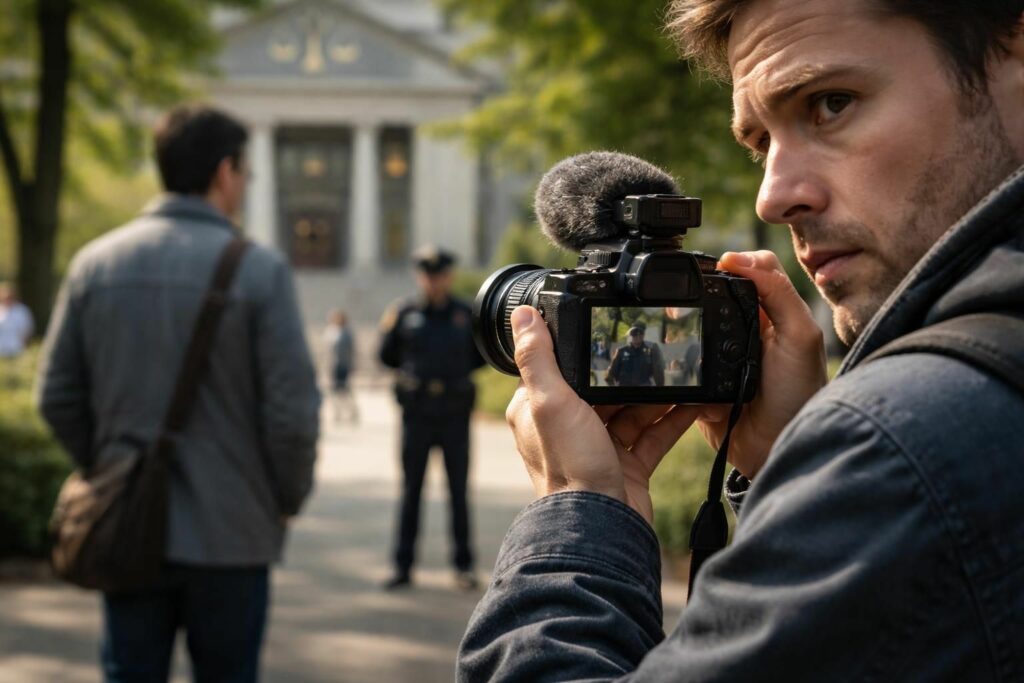
The practice of filming others raises numerous essential legal questions in our modern society. The development of image capture technologies, particularly smartphones, has made it more accessible than ever to record videos of people in various contexts. However, the law strictly regulates this practice, particularly through the right to one’s image and respect for privacy. The impact of these regulations is particularly significant in situations where recording could lead to legal consequences, whether intentional or not. Therefore, understanding these rules is crucial for navigating the legal implications inherent in recording videos of others.
The Basics of the Right to One’s Image
The right to one’s image is a fundamental aspect of French law. According to Article 9 of the Civil Code, every individual has the right to respect for their private life. This includes the right to oppose the dissemination of their image without their consent. This rule applies in various contexts, whether in public or private places. For example, the dissemination of a photo or video showing an identifiable person requires their explicit agreement, even if it was taken in a public place. This principle helps protect the integrity and representation of individuals against potentially harmful or intrusive uses.
Consent and Its Implications
Consent is at the heart of the right to one’s image. It must be informed, specifying the use that will be made of it. In France, any use of a person’s image must be accompanied by a written agreement, stating the purpose of the recording, the duration of its use, and the medium of dissemination. In the case of children, it is imperative to obtain the consent of parents or legal guardians, which adds a necessary layer of protection for minors.
- Use for commercial purposes: An explicit agreement is required.
- Recording in private settings: Consent is necessary, regardless of the medium.
- Recording in public settings: The image must not isolate the filmed person.
Exceptions to the Right to One’s Image
There are several exceptions to the principle of the right to one’s image. These exceptions concern the right to information, freedom of expression, and notably the case of current events or demonstrations where people are filmed in a group. In these circumstances, their image can be used without their consent, provided they are not individualized. However, these exceptions must remain within the limits of respect for human dignity, without the abusive exploitation of captured images.
Liability and Legal Consequences
Filming someone without consent can lead to significant legal consequences, including fines and imprisonment. According to the Penal Code, capturing images without authorization is punishable by a fine of up to €45,000 and one year of imprisonment. These penalties can increase in the case of disseminating the images, particularly for sexually explicit content, where fines can reach €60,000 and two years in prison. This strictness is essential to deter abuses and ensure respect for individual rights.
Possible Remedies in Case of Violation
When the right to one’s image is violated, several remedies exist. The first step is to ask the author of the dissemination to remove the image. If this approach fails, it is possible to bring the matter before a civil court to obtain a judicial removal and, potentially, damages. Additionally, contacting the CNIL may be necessary when personal data is involved. A complaint can also be filed to obtain sanctions in the event of a proven violation of the right to one’s image.
The Impact of GDPR on Video Recording
The General Data Protection Regulation (GDPR) introduces additional obligations for those filming others, particularly regarding data retention and transparency. Video recordings must be justified by a legitimate purpose, and the duration of image retention must be limited. These provisions aim to guarantee individuals’ right to privacy by strengthening the protection of personal data during video recordings.
How to Comply with GDPR When Recording
To comply with GDPR when making videos, it is essential to:
- Inform the filmed individuals about the purpose of the recording.
- Obtain explicit consent from identifiable individuals.
- Limit the duration of image retention.
- Implement security measures to protect the collected data.
Specific Obligations for Merchants and Businesses
Merchants and businesses wishing to film in their premises must comply with stringent obligations. This includes displaying clear information regarding video surveillance and the purpose of this surveillance. They must also ensure that access to recordings is limited and that a procedure is established in case of claims regarding the right to one’s image. These measures aim to establish a climate of trust between businesses and the public.
The Ethical Issues of Video Recording
Beyond the legal implications, the phenomenon of video recording raises significant ethical questions. The ability to film anyone at any time raises concerns about privacy and data protection. Intrusive behaviors, such as filming without valid reason or sharing videos maliciously, can harm a person’s reputation and create distressing situations.
Filming for Security vs. Privacy
In situations where public safety is at stake, the debate becomes more complex. Filming at public events may be justified for security reasons. However, it is crucial that this practice is conducted with respect for individuals and their rights. The line is thin: recording for security reasons should never turn into a means of abuse or intrusive surveillance.
Reflection on Individual Responsibility
Every individual has the responsibility to act ethically when capturing images. Asking questions about the necessity of recording, the respect owed to others, and the purposes of these recordings is essential. A collective awareness is needed to frame this practice positively, allowing everyone to navigate in an environment that respects the rights of others.
Filming in a Professional Context: Specific Obligations
In a professional context, the obligations are even stricter. Companies must consider not only the right to one’s image but also the collective decisions of the company regarding image capture. For example, during corporate events, it is often required to obtain the consent of all participants before proceeding with recordings. This is particularly true for videos used for commercial or promotional purposes.
The Importance of Transparency in Video Projects
Video projects carried out by professionals often require contracts and agreements regarding usage rights. This includes details on how the image will be used, as well as the duration and territory of dissemination. Transparency in these agreements is not only a legal obligation but also contributes to harmonious relationships between professionals and participants. It establishes a clear framework that protects the rights of the individuals involved.
- Clear contracts: Establish written terms with participants.
- Specified objectives: Define clear objectives for the use of images.
- Legal training: Raise awareness among the team about legal issues regarding image capture.
The Implications of Social Media
With the rise of social media, the dissemination of videos has become instantaneous and global. This phenomenon increases the stakes of responsibility, as content can easily be shared and go viral. A video taken without consent and shared on these platforms can have a devastating impact on individuals’ privacy. Therefore, it is essential that users of these platforms are well-informed about the laws surrounding image capture to avoid harmful situations.
Conclusion on the Practical Implications of Filming According to the Law
In summary, it is essential to remain aware of the legal and ethical implications of recording videos in public. French law ensures rigorous protection of the right to one’s image and privacy, and consequences may arise if these rights are not respected. Individuals and professionals alike are called to comply with legal requirements while reflecting on their ethical responsibilities when using capture technologies.
| Type of Location | Who Can Film | Conditions |
|---|---|---|
| Public Road | Anyone | Respect for the right to one’s image |
| Establishment Open to the Public | Operators and Staff | Warning and purpose of security |
| Visible Private Property | Owner | Do not film the public part without authorization |
To learn more about the right to one’s image.