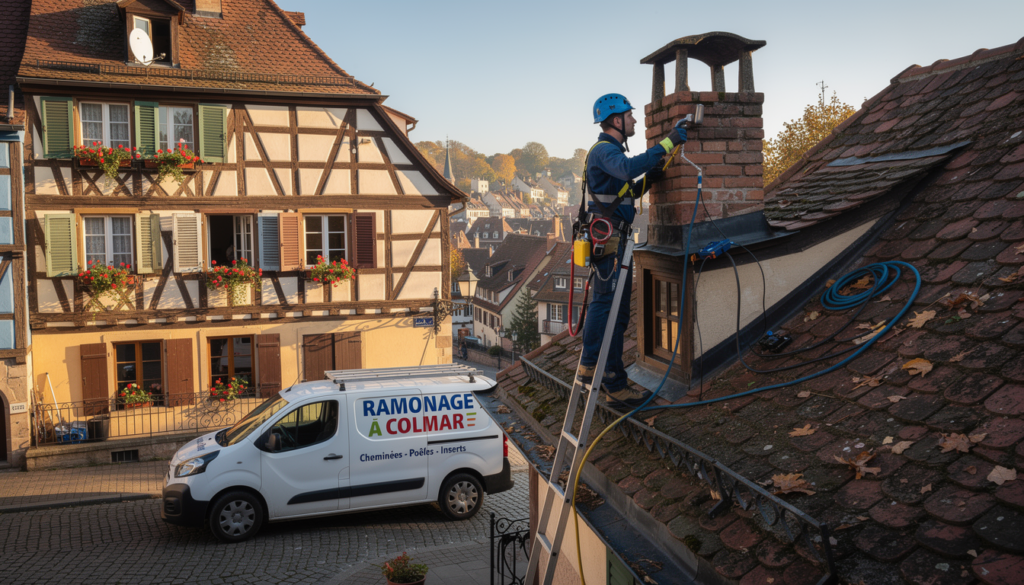
In Colmar, chimney sweeping should not be taken lightly. It is a regulatory obligation that directly involves the responsibility of the owner, and sometimes that of the tenant depending on the rental agreement. In the event of a disaster or during an inspection, neglecting this duty can have significant consequences, often overlooked. Therefore, it is essential to be well-informed about the legal risks, the local regulations, and the steps to follow to ensure safety and compliance within one’s home.
What does local regulation impose on chimney sweeping in Colmar?
The regulations on chimney sweeping vary by municipality and department. In Colmar, the sweeping frequency depends on the type of fuel used: one to two cleanings per year are generally required by prefectural or municipal order. This rule aims to limit fire risks, reduce pollutant emissions, and also optimize heating efficiency.
To find a reliable service provider, it is wise to contact a chimney sweep in Colmar. It is imperative to consult local texts to ensure that all current legal obligations are met. Indeed, each municipality may impose its own requirements, making regular monitoring of the applicable regulations in Colmar regarding mandatory sweeping essential.
Who is responsible for mandatory chimney sweeping?
In principle, it is the owner who bears the responsibility for the maintenance of the chimney in a vacant property. If the property is rented, the lease often stipulates that this task falls to the tenant. However, some exceptions exist, so it is important to carefully review the clauses of the rental agreement to avoid any misunderstandings about the distribution of responsibilities.
Only a qualified professional can carry out the sweeping and issue a sweeping certificate. This document holds significant legal value, especially during a judicial assessment or a dispute with the insurance company. Performing the sweeping oneself has no legal recognition and exposes one to penalties.
Sweeping frequency according to the heating method
The requirements differ depending on whether one uses wood, pellet, oil, or gas heating. Most installations operating on wood, coal, or pellets require sweeping at least twice a year, while a single annual cleaning may suffice for gas, subject to local orders specific to Colmar.
Adhering to this sweeping frequency not only ensures compliance with the law but also preserves the longevity of the equipment and guarantees the safety of the residents. Neglecting this maintenance increases the risk of fire, with serious consequences both materially and legally.
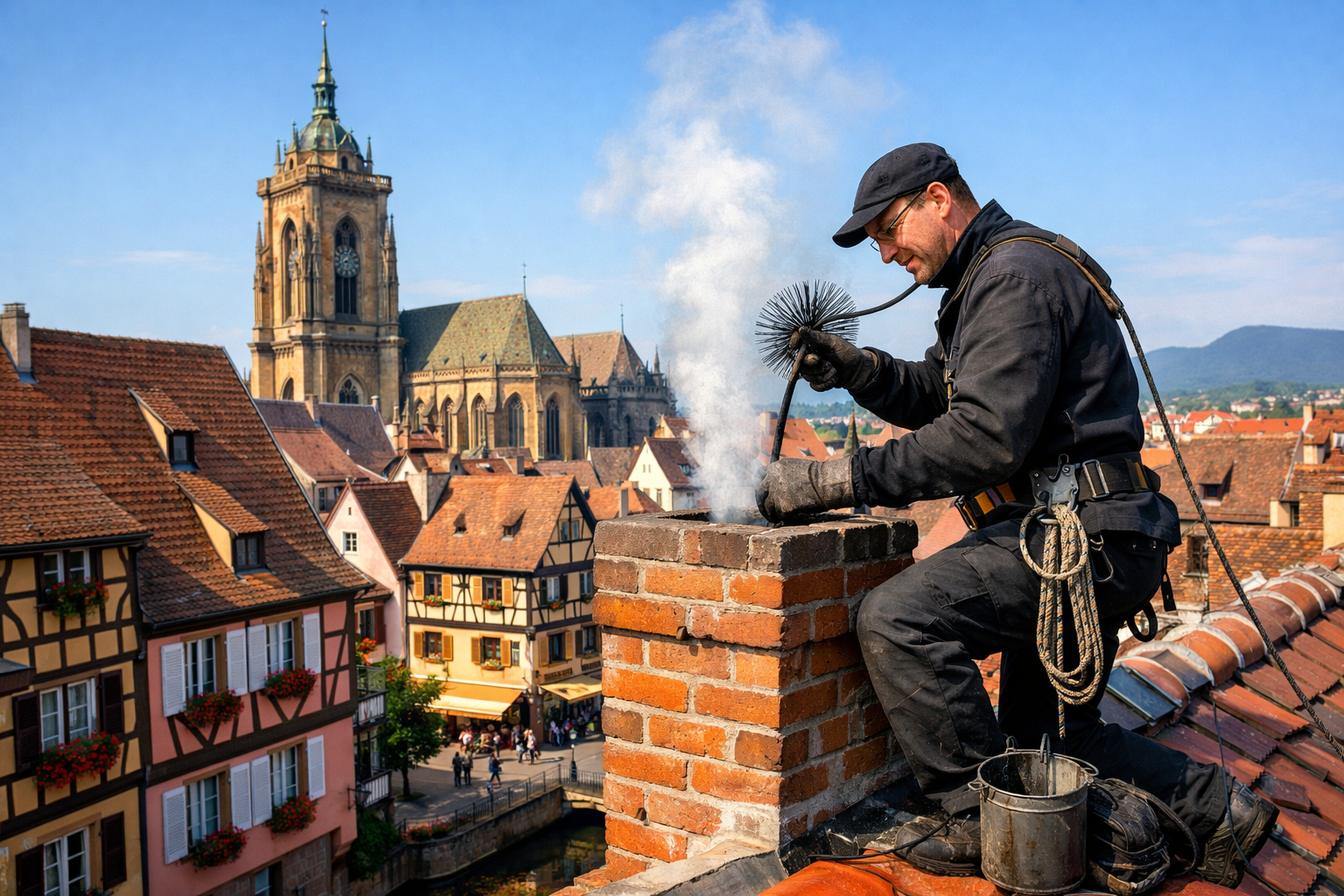
What documents and guarantees are provided after a sweeping?
After the intervention, the sweeping certificate provided by the professional becomes your best ally. It serves as proof to the home insurance in the event of an incident related to a lack of sweeping. Its validity relies on adherence to procedures and the qualification of the chimney sweep.
In case of a dispute, judicial assessment, or disaster, this certificate becomes crucial. Without this proof, the owner’s defense in court becomes significantly more complicated, especially if civil liability is involved following a fire caused by a lack of maintenance.
| Type of installation | Minimum sweeping frequency | Responsible party | Required document |
|---|---|---|---|
| Wood/coal chimney | Twice a year | Owner or tenant | Sweeping certificate |
| Pellet stove | Twice a year | Owner or tenant | Sweeping certificate |
| Gas heating | Once a year | Owner or tenant | Sweeping certificate |
What legal protection does regular sweeping offer?
Regular sweeping provides genuine legal protection against unforeseen events. In the event of a fire, the absence of a sweeping certificate may lead to denial of compensation by the insurer. Some home insurance contracts even include a specific clause requiring the presentation of this document in the event of a disaster.
This simple reflex protects against costly disputes and avoids many financial or administrative inconveniences. It is an essential guarantee for any owner concerned about their peace of mind and the compliance of their property.
Civil liability in the event of a disaster related to lack of sweeping
When a disaster occurs involving the chimney, the civil liability of the owner may be sought if the flue has not been maintained according to the law. In addition to material losses, there is a real risk of legal action, especially if the disaster causes damage to others.
In the face of a judicial assessment, it will be systematically checked whether the mandatory sweeping has been carried out. A lack of maintenance exposes one to significant penalties, ranging from fines to convictions for endangering others, depending on the severity of the facts and the damages incurred.
Penalties for non-compliance with the sweeping obligation
Failure to comply with the sweeping obligation is subject to penalties provided by law. This goes well beyond a simple warning: it can lead to a fine, denial of compensation in the event of a disaster, or even personal liability in case of significant damages.
Neglecting chimney maintenance exposes one to:
- A fine for violation of regulations
- Exclusion of coverage by home insurance
- Civil lawsuits in case of serious harm caused to third parties
Hiring a qualified professional to schedule this service remains a prudent and secure approach.
How to choose a professional for compliant sweeping?
Choosing a qualified chimney sweep in Colmar is the best way to meet all regulatory requirements. This specialist is familiar with the latest developments in local and national standards and operates in full compliance with the applicable rules for each installation.
Before any intervention, it is recommended to check:
- The professional’s registration with the chamber of trades or the commercial register
- Subscription to appropriate professional insurance
- The use of techniques recognized by regulations (mechanical or traditional)
A good service provider always explains the sweeping process, advises on the appropriate frequency for your installation, and systematically provides the sweeping certificate required by law.