Owning a fireplace or a wood stove means taking the mandatory flue sweeping seriously. In Troyes, the regulations surrounding chimney maintenance are strict and aim to ensure both fire safety and compliance with standards. As a property owner, it is essential to understand your responsibilities to avoid any unpleasant surprises with insurance or authorities. Learning the secrets of effective and sustainable flue sweeping also helps extend the life of your installation while providing real legal protection.
What are the legal obligations regarding flue sweeping in Troyes?
The flue sweeping obligation is not just common sense but is based on specific texts. The law requires property owners to adhere to certain strict rules, particularly regarding fire safety and public health. In Troyes, the local regulations primarily stem from the departmental health regulations as well as the building and housing code.
In practice, an annual flue sweeping must be performed for each open fireplace or wood stove used as the primary heating source. Sometimes, the sweeping frequency may be increased to twice a year if the local regulations or the type of fuel requires it. These legal obligations aim to limit fire risks and ensure optimal operation of heating appliances. If you need guidance in your procedures, you can contact a chimney sweep in the city of Troyes.
What is the required flue sweeping frequency in Troyes?
The municipality applies national regulations while considering regional specifics. Whether in a single-family home or a condominium, the sweeping frequency depends on the nature of the flue, the fuel used, and the recommendations of the local health regulations. It is therefore essential to inquire precisely about what applies to your residence.
Here is what the local regulations in Troyes generally stipulate:
- One annual sweeping for regularly used fireplaces (wood, coal, oil).
- Two sweepings per year for flues of wood or coal boilers used intensively.
- Verification of specific requirements via the condominium regulations or the rental contract.
What does the regulation say for condominiums and rentals?
In a condominium, the condominium regulations may set a specific schedule for the maintenance of collective flues. In Troyes, it is not uncommon for a general assembly to decide to harmonize interventions and distribute costs among co-owners.
Regarding rentals, it is often the tenant who must take care of the flue sweeping, unless otherwise stated in the lease. This distribution must be clearly defined to avoid any future disputes.
Why keep proof of flue sweeping?
After each intervention, a professional issues a flue sweeping certificate. This document proves that the chimney maintenance has been carried out in accordance with regulations. In Troyes, it is strongly advised to keep these documents, as they serve as proof in case of a disaster or inspection by health authorities or home insurance.
To protect yourself legally, it is wise to carefully file each certificate. In the event of water damage, a fire, or even when selling a property, providing these documents demonstrates your diligence and can prevent many complications. In case of a dispute, this precaution makes all the difference.
What are the risks and penalties for non-compliance with obligations?
Neglecting the mandatory flue sweeping exposes you to significant risks. From a criminal perspective, non-compliance with the regulations can result in a fine, the amount of which will depend on the severity of the observed violation. The mayor or the prefect may issue a report in the event of a maintenance failure, especially after a fire department intervention following a fire outbreak.
From a civil perspective, the situation becomes serious if a fire occurs. The absence of proof of flue sweeping may lead to a reduction or even a total denial of compensation by the insurer. This legal protection provided by regular flue sweeping is therefore essential for any owner concerned about securing their property.
Flue sweeping from the top or from the bottom: what’s the difference?
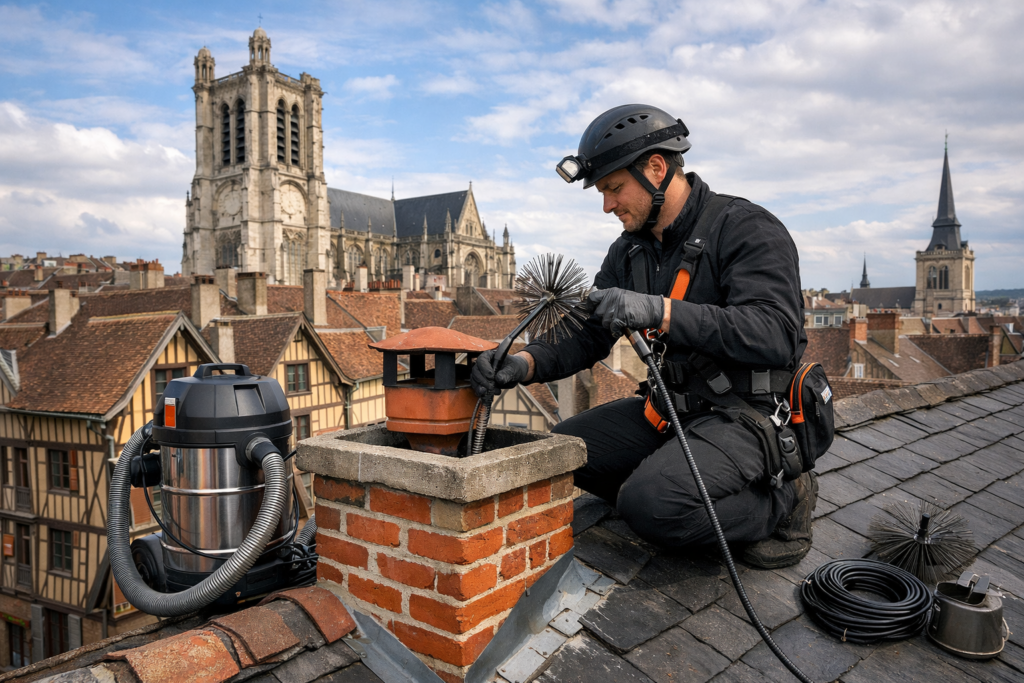
Troyes professionals offer two main methods: top sweeping (from the roof) or bottom sweeping (from the inside). Each technique has its advantages, but the regulations do not impose a specific method, as long as the result is compliant and the flues are properly maintained.
Top sweeping is particularly effective for cleaning the entire length of the flue but requires secure access to the roof. Bottom sweeping limits the risk of falling and is better suited for single-family homes where the roof is difficult to access. In any case, the choice is made in agreement with a certified professional, ensuring the quality and safety of the intervention.
What are the secrets to effective and sustainable flue sweeping?
Meeting the legal obligations is not enough: it is also important to adopt some good practices to ensure sustainable maintenance. Using dry wood, properly ventilating the room, and ensuring that ventilation grilles are not obstructed are simple gestures to adopt to limit soot deposits and maintain the efficiency of installations.
Another valuable tip: prioritize the intervention of qualified craftsmen who can issue valid certificates and provide their advice. A properly conducted flue sweeping extends the lifespan of your fireplace or wood stove while offering optimal safety for the occupants of the home. It is the key to flawless legal protection and regained peace of mind.
| Type of installation | Minimum frequency | Responsibility |
|---|---|---|
| Individual fireplace | Once a year | Owner or tenant |
| Wood stove (intensive use) | Twice a year | Tenant (often) |
| Condominium | According to regulations | Property manager/General assembly |