Chimney sweeping, an essential maintenance obligation
The chimney sweeping of fireplaces and other heating ducts is far from a mere formality. It is a maintenance obligation imposed by law, precisely defined by decree, to ensure the safety of the housing and its occupants. Neglecting chimney sweeping can lead to significant penalties, including the cancellation of coverage by the home insurance in the event of a claim related to a maintenance failure. In most cities, including Forbach, every household using a flue must adhere to a specific schedule: generally once a year, sometimes twice depending on local regulations. This requirement applies to both apartments and single-family homes and is included among the recoverable rental charges.Who pays the bill? Distribution between tenant and owner
The question of the financial burden of chimney sweeping often pits tenant against owner. The answer depends on the nature of the intervention and is based on a few key principles derived from real estate law. These rules are generally specified in the lease contract, but they are also included in the official list of recoverable charges set by decree. Hiring a chimney sweep in Forbach allows the tenant to fulfill this routine maintenance obligation in accordance with local standards. In practice, it is the occupant of the dwelling – thus the tenant – who is responsible for routine chimney sweeping. The tenant must arrange for a visit from a certified professional and keep the certificate issued, which is essential during inventory checks or with the home insurance.What does the lease contract say about chimney sweeping?
The residential lease contract typically includes a specific clause regarding the maintenance obligation and chimney sweeping. Even in the absence of an explicit mention, the legal responsibility of the tenant remains, as it is a regulatory obligation and not solely contractual. The initial inventory allows for verification of the existing condition of the ducts. If a defect is detected, it is the owner who must carry out the necessary repairs before any rental. After that, routine maintenance and periodic chimney sweeping are the responsibility of the tenant until the end of the lease.The limits of the owner’s responsibility
The owner retains certain specific obligations. Their main role is to provide decent housing with safe and functional equipment. In the event of a structural defect in a duct, the repairs are entirely their responsibility. In other words, if the professional discovers a major issue (collapse, infiltration, non-compliance), the cost of restoration will be borne by the owner. Only the routine maintenance chimney sweeping remains the tenant’s responsibility during the rental period.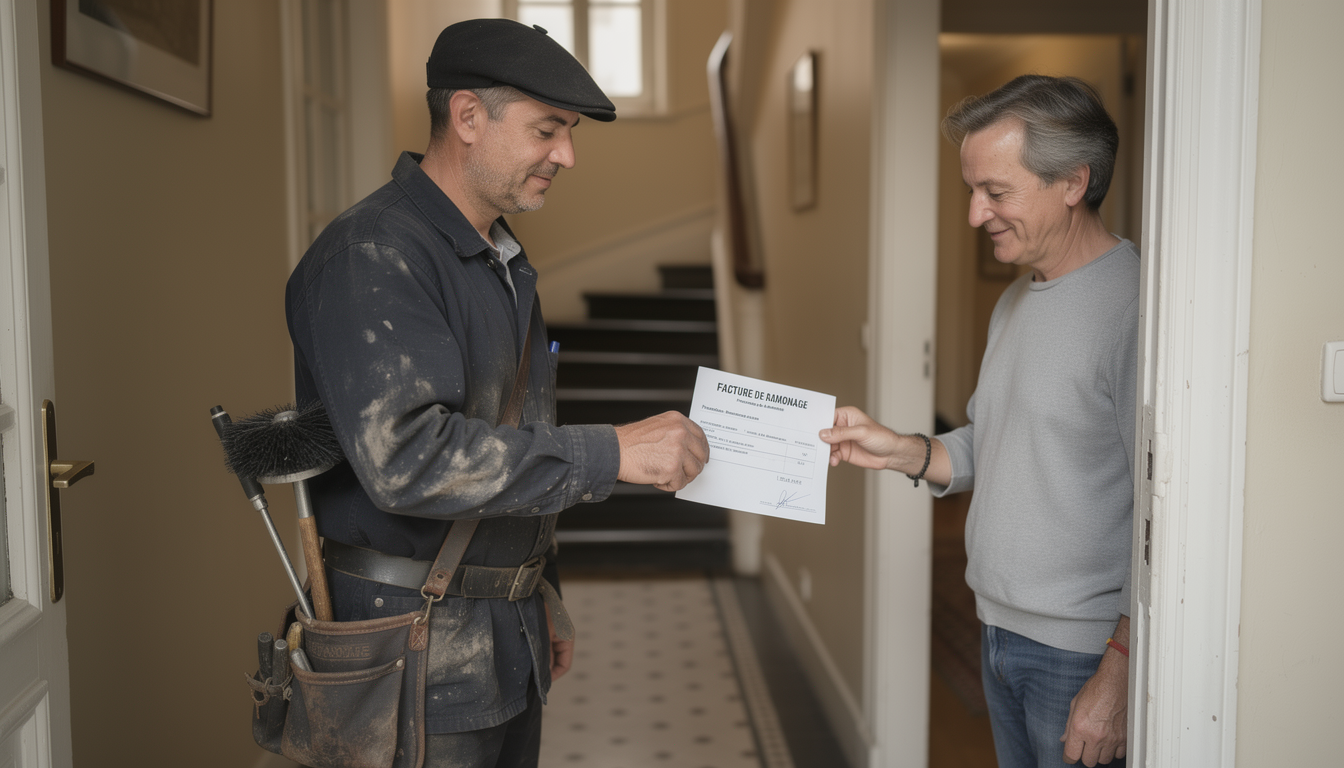
Conflict management and steps to follow
Disputes related to maintenance often arise, especially when the chimney sweeping bill is high or when each party stands firm on their position. Good communication from the moment the lease is signed can limit these inconveniences. In Forbach and elsewhere, it is essential to recall the legal framework and to systematically request the proof issued by the certified professional. In the absence of chimney sweeping, the owner may withhold the corresponding amount from the security deposit, provided they can produce objective evidence of the failure. This rigorous management avoids many disappointments during the exit inventory.- Check that the mention is included in the lease contract at the time of signing.
- Organize annual or semi-annual chimney sweeping according to local regulations.
- Request a named certificate from the certified professional.
- Regularly check the condition of the installations during inventory checks.
- Contact your home insurance to understand the implications in case of a claim.
How to prove compliance with the chimney sweeping obligation?
To avoid any disputes, it is crucial to be able to prove the completion of chimney sweeping. The visit of a certified professional entitles you to a certificate that complies with current standards. This document must be presented during the exit inventory or in the event of a claim reported to the home insurance. Remember to keep all certificates for the duration of the rental. Without proof, the owner may withhold from the security deposit or claim compensation for negligence, in accordance with the legislation on recoverable rental charges.| Responsible | Nature of the intervention | Financial burden |
|---|---|---|
| Tenant | Annual chimney sweeping of the duct | Yes |
| Owner | Structural repairs or duct replacement | Yes |
| Tenant | Routine maintenance during the rental | Yes |
| Owner | Initial compliance before rental | Yes |
Frequently asked questions about chimney sweeping payment
Can a tenant refuse to pay for chimney sweeping?
No, the tenant is required to pay the financial burden of chimney sweeping, as it is a routine maintenance obligation stipulated by regulations. A refusal exposes the occupant to a deduction from their security deposit during the exit inventory, as well as a risk of losing coverage from the home insurance.
- Chimney sweeping not performed = Possible deduction from the security deposit
- Loss of protection in case of fire due to a maintenance failure
Can an owner require proof of chimney sweeping upon the tenant’s departure?
Absolutely, the owner has the right to request the chimney sweeping certificates issued by the certified professional. In the absence of this proof, the landlord can charge the cost of the unperformed chimney sweeping to the tenant or deduct the amount from the returned security deposit.
- Systematic request for the certificate during the exit inventory
- Essential proof in case of dispute or claim
When does the owner have to cover the chimney sweeping?
The owner is responsible for chimney sweeping only during major repairs or the structural restoration of the duct, particularly before the first rental if the equipment was outdated. For routine maintenance, the burden falls on the tenant for the entire duration of the lease.
| Situation | Who pays? |
|---|---|
| Initial compliance | Owner |
| Standard annual chimney sweeping | Tenant |
| Major repair/structural issue | Owner |
What are the consequences if chimney sweeping is not performed?
Failing to carry out the chimney sweeping exposes the dwelling to a significant fire risk and automatically leads to the suspension of home insurance guarantees for any claim related to this failure. Authorities may also impose an administrative fine during a municipal inspection.
- Partial or total cancellation of rental guarantee
- Possible administrative sanctions
- Withholding from the security deposit upon return
Tenant or owner: who should pay the chimney sweeping bill?