Installing a professional plaque when practicing a liberal profession in a condominium often seems like a necessary step. However, between the condominium regulations, the requirements of the property manager, and the expectations of neighbors, the process can sometimes be fraught with obstacles. What does the legislation actually provide on this point? What are the rules to follow to install your plaque without triggering a dispute? Focus on the rights, duties, and best practices for displaying your professional contact information within a building.
The legal framework for professional plaques in condominiums
The installation of a professional plaque in the common areas of a building is subject to strict legal regulations, particularly to preserve the residential purpose of the condominium. Although practicing a liberal profession is permitted in many cases, the condominium regulations impose specific restrictions regarding advertising displays. It is not enough to order a plaque and fix it yourself: every step must comply with the applicable legislation.
The authorization to affix a professional plaque largely depends on the condominium regulations. This document, specific to each building, may contain restrictive clauses aimed at regulating (or even prohibiting) any form of signage visible from the outside or in the common areas. Before proceeding further, a professional must therefore review these internal rules and check if the installation complies with the purpose of the building.
Obtaining the property manager’s authorization and respecting the condominium regulations
It is impossible to skip the step of consulting with the property manager: the property manager is responsible for enforcing the condominium regulations and processing any requests related to the common areas. The absence of prior agreement is a major source of conflict with other occupants or co-owners. To delve deeper into the official procedures and better understand everyone’s responsibilities, it is possible to consult the website of the National Association of Professional Plaques (ANPP).
Without a written authorization, even a discreet plaque may be removed at the request of the property manager or after a complaint at the general assembly. The consent of the co-owners’ association is generally required, especially if the regulations contain specific restrictions. It is therefore advisable to submit a formal request accompanied by a detailed description: dimensions of the plaque, proposed location, materials used…
Restrictive clauses to be aware of
Some regulations outright prohibit any professional mention when the purpose of the building is exclusively “residential.” Others allow installation under certain conditions: standardized format, unique presence per office, or limitation to certain floors. A careful reading of these texts often helps avoid unpleasant surprises and better argue your case with the property manager. Non-compliance with the restrictive clauses exposes the professional to the obligation to remove their plaque.
Sometimes, modifying the regulations is possible, but this requires the agreement of a qualified majority at a general assembly. This step can become lengthy and uncertain if there is opposition within the condominium.
The agreement procedure in practice
After reviewing the condominium regulations, the official request almost always involves sending a registered letter to the property manager. This letter specifies the characteristics of the project (dimensions of the plaque, chosen material, desired positioning). In return, approval may require a vote from the co-owners. If granted, it is important to keep a copy of the agreement to avoid any misunderstandings later.
If the activity has a limited impact on the building’s life (no nuisances, low traffic), authorization may sometimes be granted more easily. Establishing an open dialogue with residents also facilitates the process.
Dimensions and positioning: what limits to respect?
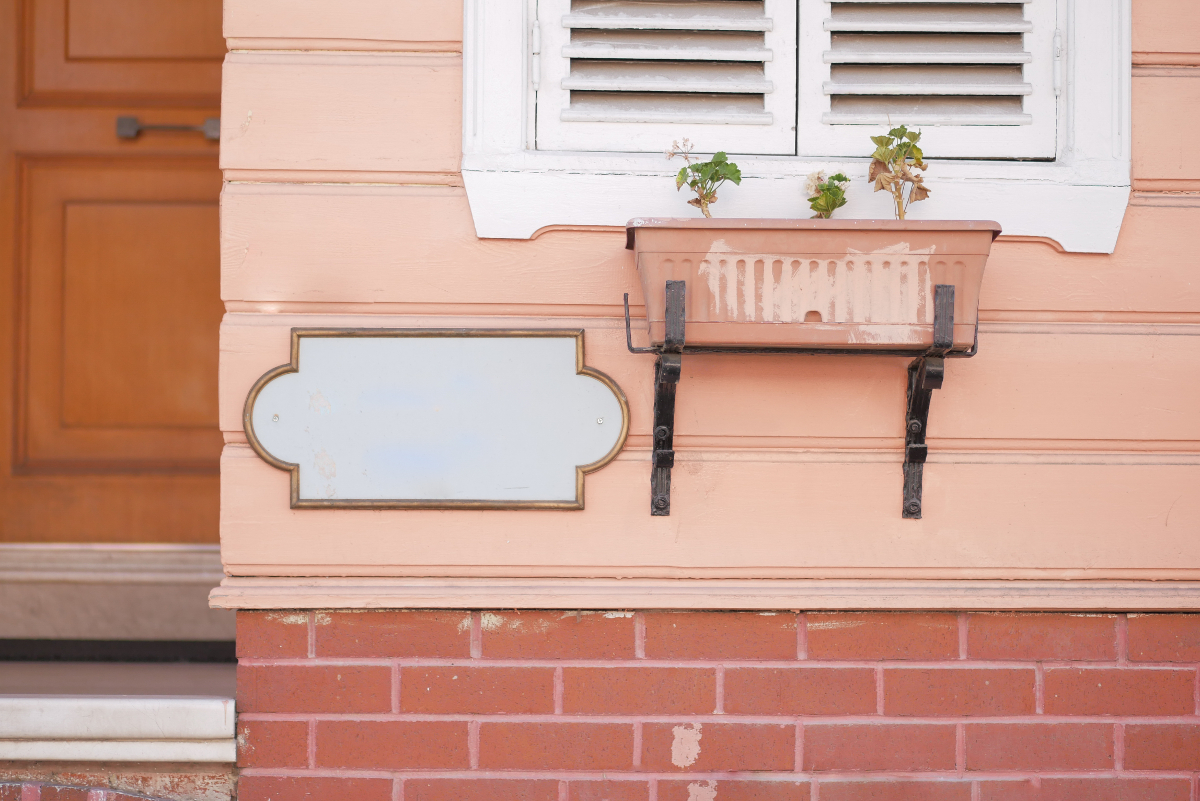
A professional plaque intended to inform without turning the building into an advertising space must adhere to rules of sobriety. Regulations do not impose specific maximum dimensions everywhere, but many regulations set their own standards to ensure visual harmony in the common areas.
The authorized location plays a key role: it is often a specific area near the main entrance, on a dedicated facade, or even on the door of the relevant office. Any display elsewhere (stairs, common corridors, elevator) is normally prohibited. Prioritizing an installation that respects the overall aesthetics of the building helps prevent tensions and misunderstandings.
- Standard dimensions frequently accepted:
- 30 x 20 cm (width x height)
- 20 x 15 cm for medical professions
- Recommended materials: brass, plexiglass, anodized aluminum
- Conforming fixation to limit wall damage
- Discretion of the design – no garish colors or prominent logos
Frequent disputes related to the professional plaque
Disagreements mainly arise when administrative steps are neglected. Unauthorized installation, non-compliance with plaque dimensions, or messages deemed too visible are the main sources of tension. Some neighbors may view signage as a visual nuisance or fear a change in the purpose of the building.
Another reason for disputes concerns non-compliance with the condominium regulations, perceived as a failure to maintain equity among residents. In this context, legal recourse remains possible to force the removal of the display.
Means of appeasement
To avoid lengthy and costly procedures, contacting in advance is essential. Explaining to the assembly the exact nature of the activity, reassuring them about respecting hours or tranquility, proving the compliance of the installation with the condominium regulations… All these steps foster a constructive rather than a conflictual climate.
In case of persistent contestation, there is also the possibility of mediation before engaging in potential legal actions. A compromise on the appearance or location of the professional plaque can sometimes resolve the situation amicably.
The rights and duties of the professional
The practice of a liberal profession entails the right to make one’s activity known in reasonable ways. This right is not absolute and is subject to compliance with the specific clauses imposed on each building. The freedom of information must never disturb tranquility or verge on excessive commercial advertising.
Conversely, the professional has the duty to maintain the installed plaque, ensure its proper fixation, and remove it if the activity ceases. In case of deterioration or regulatory changes, a prompt update or removal must be carried out to maintain good relations with the community.
Installing your professional plaque without conflict: practical tips
Moving into a new residence and wanting to practice a liberal profession does not happen spontaneously when it comes to publicly displaying a professional plaque. To succeed in this delicate step, adopting a rigorous approach from the start remains the best option.
Respecting the condominium regulations, seeking the written agreement of the property manager, choosing appropriate dimensions and a discreet material are essential for integrating smoothly. Communicating the project details transparently also reassures other residents about respecting the purpose of the building.
| Step | Description | Desired outcome |
|---|---|---|
| Reading the regulations | Check clauses related to signage | Anticipate restrictions |
| Request for authorization | Detailed letter to the property manager | Avoid any future disputes |
| Selection of materials | Choose a sober and robust material | Durability, visual harmony |
| Negotiation with neighbors | Reassure about compatibility with collective life | Reduce the risk of complaints |
| Conforming installation | According to the obtained agreement | Preserve the tranquility of the common space |
Legislation, common sense, and consultation: a balance to find
Installing a professional plaque in a condominium is as much about respecting the applicable law as it is about the art of composing with the collective. Between the obligation to inform the public and the imperative of discretion, finding the right balance makes the installation acceptable for all. Taking the time to discuss, adapting the dimensions, and prioritizing neutral materials greatly contributes to defusing disputes and enhancing peaceful cohabitation.
Experience shows that most conflict situations arise when administrative steps and exchanges are rushed. With a bit of foresight and dialogue, the professional plaque then becomes a simple useful marker, not a source of permanent tension.