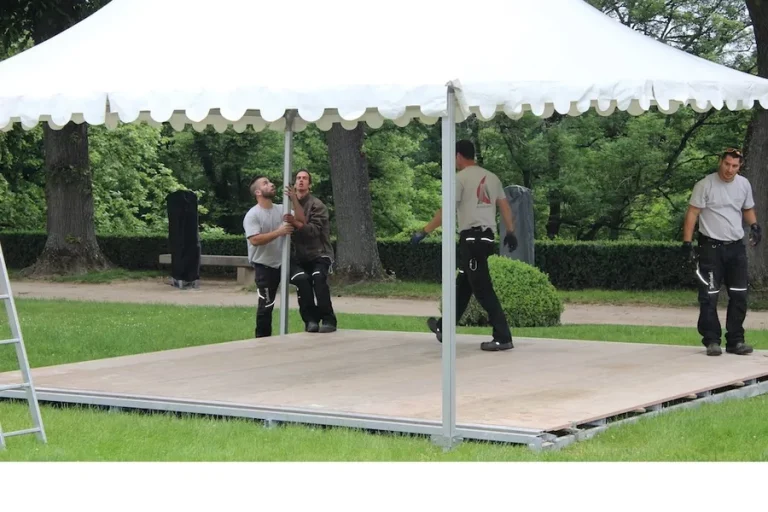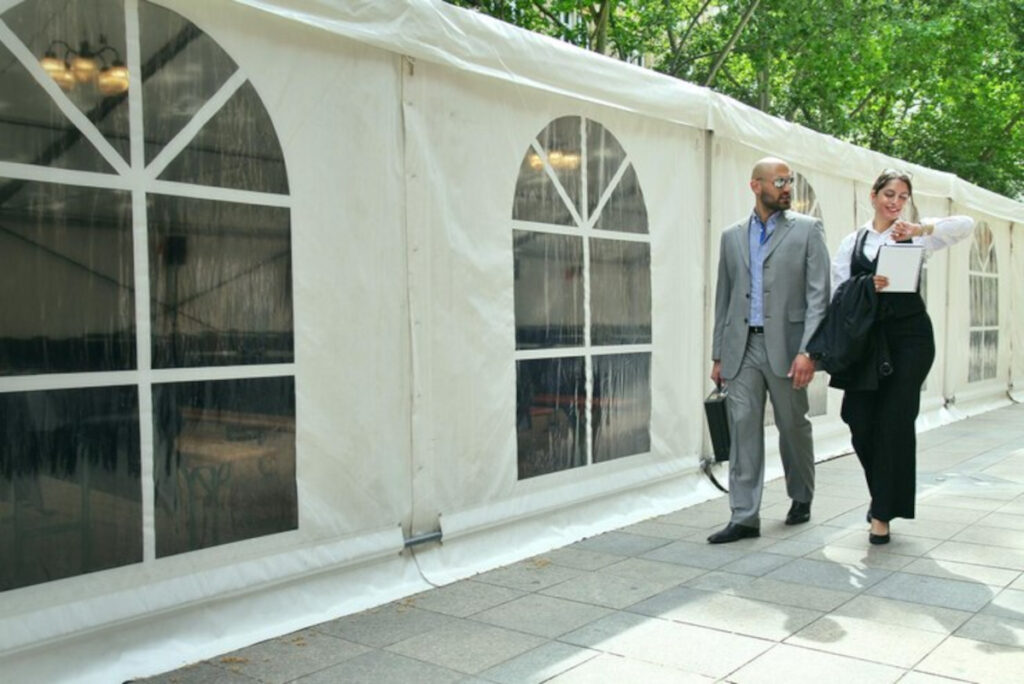
The regulations regarding the reception of the public outdoors aim to ensure the safety of individuals. Manufacturers must therefore comply with the applicable technical standards. Control offices authorized by the Ministry of the Interior carry out thorough inspections.
Receiving the public outdoors combines numerous advantages. The setup offers more flexibility than a building, the landscape fosters a good atmosphere, participants benefit from a larger space, and natural lighting enhances photos. Event organizers and artists thus prefer this format when the weather is favorable. However, even if the reception takes place in a private setting, it must comply with certain regulations. Let’s take stock.
What are the establishments receiving the public outdoors?
Establishments receiving the public (ERP) are divided into two main categories: ERPs located in a building and special ERPs. Designed to host the public outdoors, CTS (tents, marquees, and structures) belong to this second category. The type of operation, their framework, and their location require the implementation of specific measures.
Mobile structures can accommodate up to 50 people maximum. The capacity determines the category of other CTS: more than 1500 people (I), from 701 to 1500 people (II), from 301 to 700 people (III), and 300 people or less (IV).
Owners and operators are subject to the same obligation. The cts regulations aim to ensure public safety.
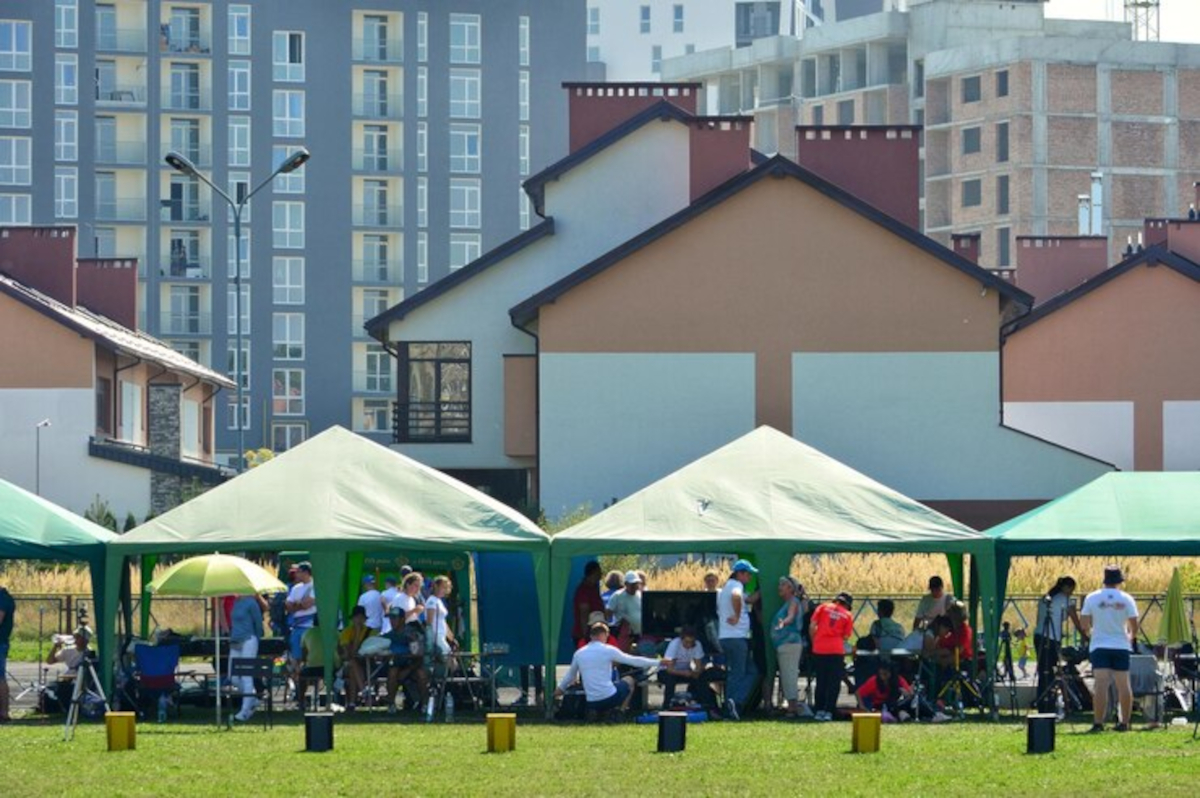
Special ERPs: overview of the current regulations
Legislators have supplemented the safety regulations against the risks of fire and panic over the years. Manufacturers must avoid the risks of ignition, integrate a visible access route, provide weather-resistant products, and design a stable framework that facilitates the evacuation of the public in case of an issue. Furthermore, the texts recommend installing CTS in an area close to a water point if possible.
The provisions concern mobile structures with an area of 16m2 and more. The mayor’s authorization is required before opening a CTS facility to the public. A non-compliant structure poses a threat, and control offices thus play an important role.
The verification office, a key player
Inspections focus particularly on fire reaction and the stability of the framework. Fire safety standards have been adjusted, but they still require rigorous verification. CTS must also comply with accessibility conditions so that persons with reduced mobility can access them freely.
Organizations authorized by the Ministry of the Interior issue a safety register valid for the duration of the operation. An extract accompanies the requests submitted to the town hall.
Special ERPs: administrative procedures
The departmental prefect issues a certificate of conformity based on the opinion of the departmental consultative commission for safety and accessibility. He assigns an identification number that will be displayed on the establishment.
Regulations vary according to local authorities, so it is essential to inquire in advance. Submitting a prior declaration two months before an event is a good timing. The relevant services will thus have time to consider the request. Officials facilitate the process by providing forms to fill out on their website. Among the required information are, among others, the date, the number of participants, and the contact details.